Understanding Setup Costs
When requesting instrument maintenance, one of the most common questions is regarding the cost structure: "Why does this specific work cost this much?" Precision tasks, such as fret leveling or replacement, are not simple parts swaps; they require advanced craftsmanship, significant time, and specialized equipment. From the perspective of Ketiminetrail, based in Chuo-ku, Fukuoka, this guide explains the breakdown of fair adjustment costs and provides criteria to help you choose the right plan based on your instrument's current condition.
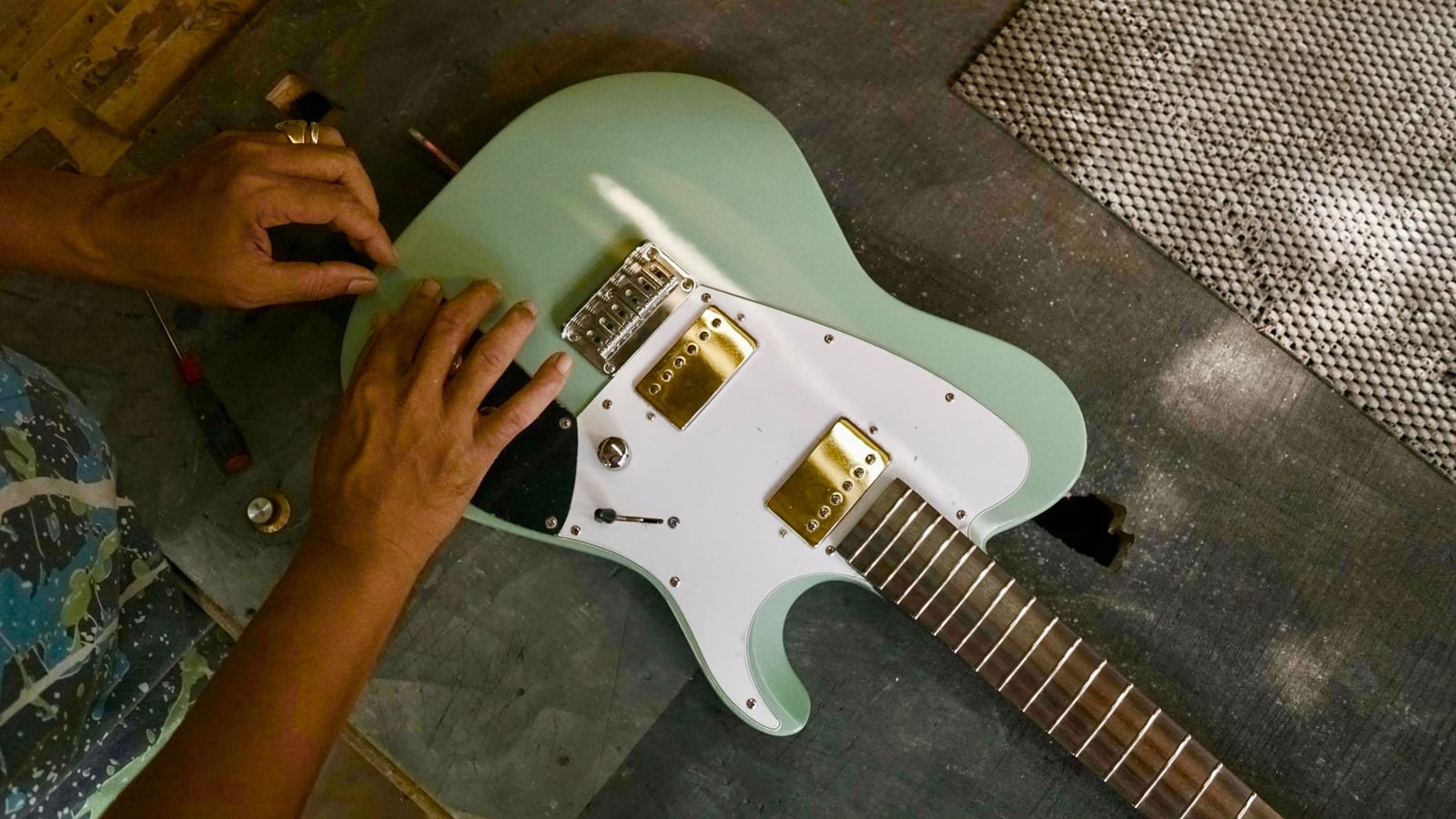
1. Three Core Elements of Maintenance Costs
Instrument maintenance costs are primarily composed of three elements: "Technical Labor," "Consumables and Materials," and "Facility Maintenance."
Technical labor is not merely payment for the hours spent on the bench, but for the years of experience and expertise required to execute the task. For example, during fret leveling, a technician must achieve a surface precision of less than 0.1mm. This level of accuracy directly impacts playability and tonal consistency. Material costs include high-grade abrasives, specialized oils, and replacement fret wire.
Additionally, the cost of maintaining a strictly controlled environment (45-55% humidity) in an urban area like Fukuoka is indirectly reflected in the pricing. Adjusting an instrument in an unstable environment increases the risk of deformation after delivery; therefore, rigorous climate control is an essential part of the professional process.
2. Cost Breakdown of Fret Leveling
"Fret Leveling" is the process of flattening the surfaces of frets that have worn down over time to eliminate buzzing. This process involves several critical steps:
- Analysis: Identifying worn areas using straight-edges and precision gauges.
- Leveling: Using professional blocks and abrasives to ensure the overall height is uniform.
- Crowning: Reshaping the flattened tops of the frets back into a rounded arc to ensure precise intonation.
- Polishing: Achieving a mirror finish to optimize string glide and feel.
Each of these steps is performed by hand and takes several hours per instrument. This is not a quick fix, but a reconstruction of the instrument's overall balance. For more details, please visit our Fret Replacement & Leveling page.
3. Criteria for Full Fret Replacement
There are cases where leveling is sufficient and cases where a full replacement is mandatory. The deciding factor is the "remaining fret height."
If frets are leveled too aggressively, the string height becomes excessively low, which degrades playability. If the fret tops are already significantly low or have deep grooves, we recommend a full replacement. This process is far more labor-intensive than leveling, as it requires removing old frets with specialized tools, seating new wire, trimming the ends, and then performing the leveling process from scratch.
| Item | Fret Leveling | Full Refret |
|---|---|---|
| Objective | Eliminate minor buzzing | Complete restoration of wear |
| Labor Time | Moderate | Extensive (Precision work) |
| Impact | Maintains current height | Restores to original height |
| Recommended When | Minor dips are present | String height is at its limit |
4. Fukuoka's Climate and Maintenance Costs
The Kyushu region, including Chuo-ku, Fukuoka, experiences a harsh cycle of high humidity in summer and dryness in winter. Wooden instruments are particularly susceptible to these changes, leading to neck bowing or body shrinkage, which causes "fret sprout" or buzzing.
Therefore, it is crucial to combine fret work with a neck adjustment tailored to the current season. By performing appropriate maintenance during seasonal transitions, you can reduce the frequency of expensive full replacements and improve long-term cost-efficiency. We discuss this further in our Seasonal Guitar Care Guide.
5. Cost Optimization Checklist
Use this self-check list to avoid unnecessary expenses and choose the most appropriate plan for your needs.
- Are only specific frets worn down? (Partial leveling may suffice)
- Has the overall string height become too low? (Sign for replacement)
- Do you frequently hear "buzzing" during play? (Leveling is required)
- Have you had a major adjustment in the last year? (Basic setup might be enough)
6. Preparation and Consultation
At Ketiminetrail, our priority is to provide a proposal based on your budget and the instrument's actual condition. We never recommend expensive plans unnecessarily.
When consulting with us, please be as specific as possible about your dissatisfaction (e.g., "buzzing on the 3rd fret" or "difficulty playing in high positions"). This allows us to reduce diagnostic time and provide a more precise estimate.
Diagnostic fees are free of charge, so we recommend having a professional technician inspect your instrument first. You can reach us via our Contact Form.